
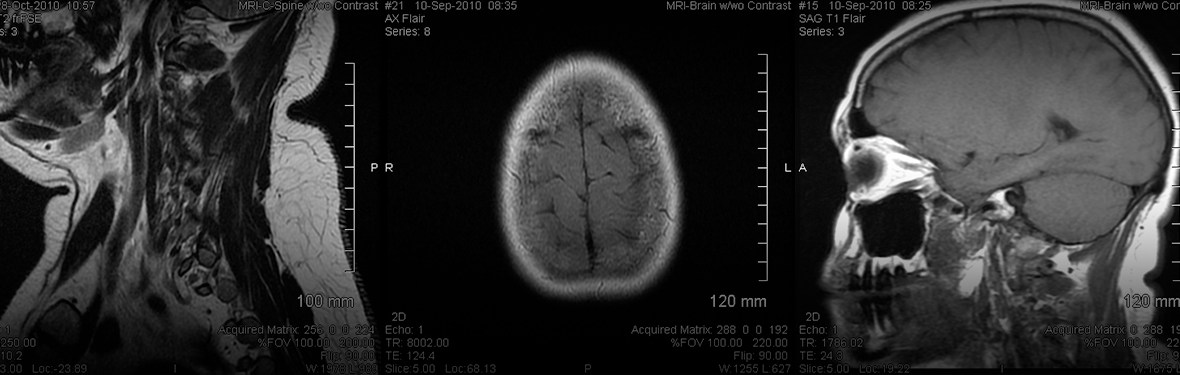
If you were anything like me, you probably had strange symptoms sneak up on you. Mine started with my eyes. I am extremely near-sighted to begin with, but what was happening in my left eye wasn’t about blurred vision.
You know when you stare at a bright light and you get a floater for a few seconds? It was like that, only it wouldn’t clear up.
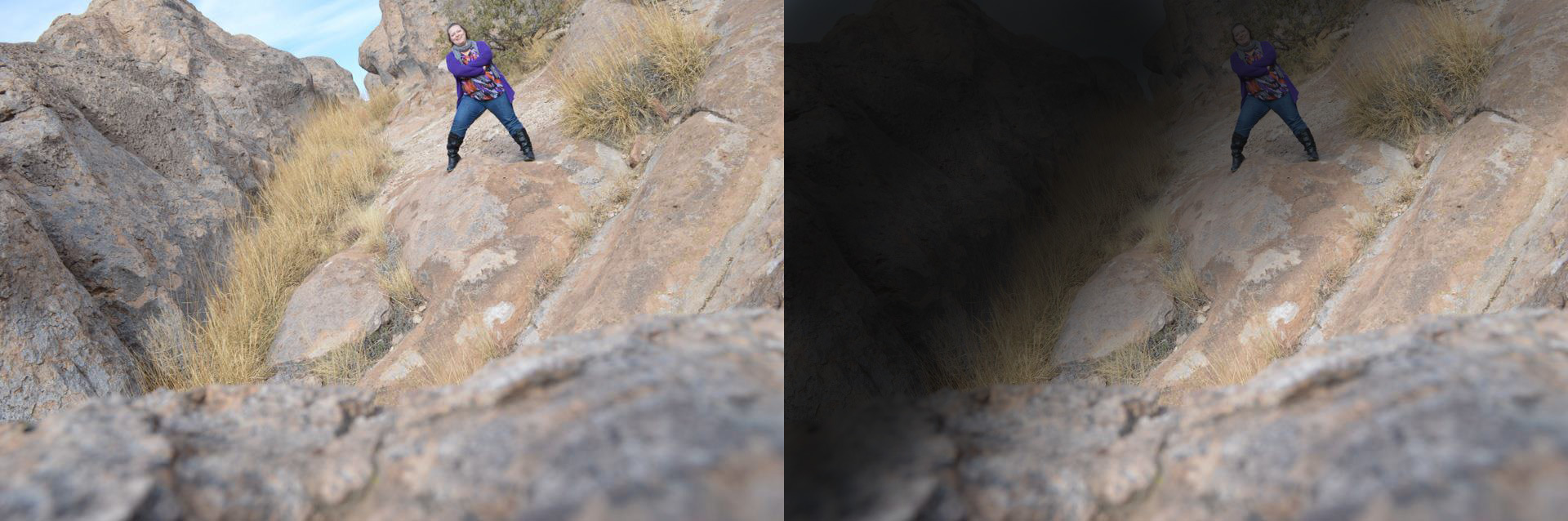
It was like this dark gray gauze was being pulled down over just my left eye. That’s optic neuritis. It lasted about a month, during which time I went to my optometrist, who referred me to an ophthalmologist, who did a ton of tests. The MRI I had then was inconclusive … in other words, no lesions were seen that could have signaled MS at the time.
Fact: There is no clear-cut diagnosis for MS, but rather a battery of tests to rule out other diseases first. Two rounds of MRIs spaced a few months apart is the most definitive way to know.
My vision came back within weeks, but soon thereafter, I started having severe fatigue. I was weak and couldn’t stand for any amount of time. It was summer, and as you might have noticed, temperatures can affect your MS in strange ways.
Then I started losing my balance and my right leg just didn’t want to lift to walk. I was literally dragged to the ER (while I don’t recommend that approach, I will say that the immediate care and pokes and proddings I received from that visit hastened my diagnosis).
So the ER neurologist ordered that I stay in the hospital for several tests and to receive steroid infusions. The tests I received (in no particular order because I probably don’t remember the timeline anyway):
- MRI of brain and spinal column (with contrast dye)
- CAT scan
- X-rays
- blood work (to rule out infections and other afflictions such as meningitis and Lyme disease)
- spinal tap (or lumbar puncture) – I’ve talked about that in an older post
I stayed in the hospital around a week, which was more than long enough for me to get tired of the food and enough time for the steroids to begin working their magic and get me back on my feet.
But the tests weren’t done. MS is a hard disease to diagnose because it likes to mimic other diseases, which doctors must rule out first. So while the neurologist was pretty certain I had MS, he still wanted a few more tests. So then I had an EKG, a visual evoked potential test, and another MRI.
None of these tests were painful. They were all a little intimidating in their own right, with the spinal tap probably the most dreaded. But as long as you stay horizontal for the rest of the day, the aftereffects aren’t as rough.
So here’s what neurologists are looking for to confirm MS in a person:
- Evidence of damage in at least two separate areas of the central nervous system that have happened at two different points in time – this evidence is usually seen in a contrast-dye MRI in the form of lesions, which is where the scar tissue that gives multiple sclerosis its name is seen
Also, fun fact: Get used to the MRIs. Most people with MS get one annually to check on lesion activity. You’re hoping that those white dots are smaller and fewer in number.
Recommended reading: Diagnosing tools from the National MS Society
 One, Wild & Precious